Chronic Prostatitis: Types, Symptoms, Diagnosis and Treatment
 Medically reviewed by: Prof. Dr. Yasser BadranProfessor of Urology & Andrology — Al-Azhar UniversityLast updated: 20 November 2026Reading time: 8 min
Pelvic pain that comes and goes, burning when you urinate, and one course of antibiotics after another with no clear improvement. This is when a man starts asking: is it an infection that just won’t go away? Or is there something else that hasn’t been found yet? Chronic prostatitis is one of the most common urological problems in young and middle-aged men, and it often causes troublesome pelvic pain and a lot of worry.
Prof. Dr. Yasser Badran, Professor of Urology & Andrology at the Faculty of Medicine, Al-Azhar University, explains that understanding the exact type of inflammation is the first step toward the right treatment, one that eases symptoms and improves quality of life. In this article, we explain the types of prostatitis, its symptoms, how it is diagnosed and how it is treated, in simple language.
What Is the Prostate and What Does Prostatitis Mean?
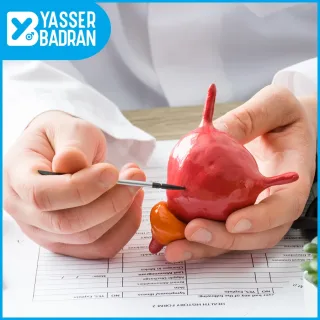
The prostate is a small gland roughly the size of a walnut. It sits below the bladder, surrounds the first part of the urethra and produces part of the seminal fluid.
The word “prostatitis” does not always mean a bacterial infection. It describes a group of conditions that differ in their causes and treatment. That is why some patients take antibiotics again and again without improvement: their problem is not a germ in the first place. This is where a correct diagnosis before starting any treatment becomes so important.
What Are the Types of Prostatitis?
Urologists around the world rely on a classification developed by the US National Institutes of Health (NIH), which divides cases into four types:
| Type | Simple description | Is there a bacterial infection? |
|---|---|---|
| Type I: Acute bacterial prostatitis | A sudden infection with fever, severe pain and difficulty urinating | Yes, and it needs urgent treatment |
| Type II: Chronic bacterial prostatitis | A recurring prostate infection that causes urinary infections that come back from time to time | Yes |
| Type III: Chronic prostatitis / chronic pelvic pain syndrome | Persistent or recurring pelvic pain for at least three months within the last six months | No evidence of infection in most cases |
| Type IV: Asymptomatic inflammatory prostatitis | Found by chance during tests done for another reason | Usually needs no treatment |
Type III is by far the most common, and it is what most people mean when they talk about chronic prostatitis.
What Are the Symptoms of Chronic Prostatitis?
Symptoms vary from one man to another, and they may flare up for a while and then settle down. The most common include:
First: Pain
- Pain or heaviness in the perineum (the area between the scrotum and the anus).
- Pain in the lower abdomen, above the pubic bone or in the lower back.
- Pain in the testicles or penis, especially at the tip.
- Pain that gets worse with prolonged sitting.
Second: Urinary Symptoms
- Frequent urination or an urgent need to urinate.
- Burning during urination.
- A weak urine stream or a feeling that the bladder hasn’t fully emptied.
Third: Effects on Sexual Life and Mental Well-Being
Many patients complain of pain during or after ejaculation, and this may come with erectile dysfunction or premature ejaculation.
Chronic pain can also cause stress, anxiety and poor sleep, and this stress in turn can make the pain feel worse, trapping the patient in a cycle that is hard to break alone. To learn more about this connection, read our article on the link between stress, depression and sexual dysfunction.
If you suffer from recurring pain in the pelvis or perineum, don’t ignore it. Consult Dr. Yasser Badran to identify the type of inflammation and start the right treatment.
When Is Prostatitis an Emergency?
Some symptoms may point to acute bacterial prostatitis, a condition that needs medical assessment on the same day. Go to a doctor or the emergency department right away if you have:
- A high temperature with chills or a general feeling of being unwell.
- Inability to urinate or severe difficulty urinating (urinary retention).
- Severe, sudden pain in the pelvis or perineum with strong burning during urination.
- Blood in the urine or pus in the discharge.
Acute prostatitis is usually treated with antibiotics under a doctor’s supervision, and some patients may need to be admitted to hospital. That is why it should never be neglected, as it can lead to complications such as a prostate abscess or the infection spreading to the blood.
How Is Chronic Prostatitis Diagnosed?
No single test can detect the condition on its own. Instead, the diagnosis is built from several elements:
- Medical history, where the doctor asks about where the pain is and how long it has lasted, urinary symptoms and sexual life, and may use a dedicated questionnaire to assess and track the severity of symptoms.
- Physical examination, including the abdomen and genitals, a rectal examination of the prostate, and sometimes an examination of the pelvic floor muscles to look for painful or tight areas.
- Urine analysis and urine culture to look for infection. The doctor may also request urine samples before and after prostate massage to distinguish between bacterial and non-bacterial inflammation.
- Additional tests depending on the case, such as measuring urine flow and the amount of urine left in the bladder, an ultrasound, or a prostate-specific antigen (PSA) test in certain cases.
One of the main goals of diagnosis is to rule out other causes that can produce similar symptoms, such as sexually transmitted infections, urinary stones, urethral stricture, epididymitis, an enlarged prostate (BPH), and in rare cases bladder or prostate tumors.
How Is Chronic Prostatitis Treated?
There is no single treatment that suits everyone, so modern medical guidelines recommend a multi-sided approach tailored to each patient’s symptoms. Its main elements include:
1. Antibiotics only when needed
Antibiotics are used when a bacterial infection is confirmed or highly likely, as in Type II, and they usually continue for several weeks, as the doctor decides. Repeating antibiotics without evidence of infection, however, usually doesn’t help and may cause side effects and bacterial resistance.
2. Alpha-blockers
Medications that relax the smooth muscle in the prostate and bladder neck. They may help improve urinary symptoms in some patients, especially when symptoms have only recently started.
3. Anti-inflammatories and painkillers
The doctor may prescribe non-steroidal anti-inflammatory drugs for limited periods to relieve pain, taking the condition of the stomach and kidneys into account. In cases of chronic pain, medications that calm pain signals in the nerves may be used.
4. Pelvic floor physical therapy
In many patients, a large part of the pain comes from tension and spasm in the pelvic floor muscles. Here, physical therapy with a trained specialist helps, including relaxation exercises and techniques to release the muscles and trigger points.
5. Psychological support
Living with chronic pain is exhausting, and psychological support or cognitive behavioral therapy can help the patient manage stress and reduce its effect on pain and daily life. Seeking this support does not mean the pain is “imaginary”; it is part of a complete treatment plan.
Dr. Yasser Badran stresses that any of these medications must be prescribed by a doctor after an assessment, so never start treatment on your own.
Daily Tips to Help Ease Prostatitis Symptoms
- Avoid sitting for long periods, and use a comfortable or ring-shaped cushion if you have a desk job.
- Cut down on foods and drinks that worsen symptoms in some people, such as spicy food, coffee and fizzy drinks.
- Drink enough water throughout the day, unless your doctor has told you otherwise for another reason.
- Treat constipation, because straining during bowel movements can worsen pelvic pain.
- Try warm baths to relax the muscles.
- Stay physically active with something like walking, and cut back on long bike rides if they make the pain worse.
- Make time for relaxation and enough sleep.
Stress makes pain feel worse, and these simple habits may ease symptoms alongside the treatment your doctor prescribes.
Can Prostatitis Turn Into Cancer?
Chronic prostatitis does not turn into cancer, and it is not a stage that comes before prostate cancer. It is also a different condition from benign prostate enlargement, although some urinary symptoms are similar, and the two can occur in the same man, especially with age.
However, inflammation can temporarily raise the level of prostate-specific antigen in the blood (PSA), so the doctor may prefer to postpone the test or repeat it after treating the inflammation before judging the result.
How Long Does Chronic Prostatitis Treatment Take?
Type III chronic prostatitis may take time and patience. In many cases, the goal of treatment is to control symptoms, reduce flare-ups and improve quality of life, not to cure it overnight.
With an accurate diagnosis and commitment to a complete plan, many patients improve noticeably over time, and symptoms may settle down for long periods.
Has Prostatitis Affected Your Erections?
Pain and stress can affect erections in some patients, and things usually improve with treatment. Learn more about the causes and treatment of erectile dysfunction.
Frequently Asked Questions
Is chronic prostatitis contagious to my wife?
Type III, the most common type, is not a bacterial infection in most cases and is not passed on to the wife. If the cause is a sexually transmitted infection, however, both partners may need testing and treatment, as the doctor decides.
Does prostatitis affect fertility?
Most men with chronic prostatitis can have children normally. In some cases of bacterial infection, semen quality may be affected, so it is advisable to see a doctor if having children is delayed.
Does prostatitis cause erectile dysfunction?
Chronic pain and stress may be accompanied by erectile dysfunction in some patients, and this usually improves with treating the inflammation and managing stress. You can learn more in our article on erectile dysfunction.
Should I take an antibiotic every time I feel pain?
No. An antibiotic only helps when there is a confirmed or likely bacterial infection. Repeating antibiotics without evidence may do more harm than good, and the decision belongs to the doctor after examination and tests.
Does avoiding intercourse help treatment?
There is no evidence that avoiding intercourse treats chronic prostatitis, and many patients can carry on with their normal lives. If ejaculation is painful, discuss it with your doctor to ease this symptom.
In Conclusion
Chronic prostatitis is not a single condition, which is why it isn’t treated by repeating antibiotics without a diagnosis, but by first identifying the type of inflammation and then building a plan that suits each patient’s symptoms, with patience and commitment to it. If you suffer from persistent pelvic pain or recurring urinary symptoms, don’t hesitate to seek a specialist assessment; the clinic offers examination, accurate diagnosis and a treatment plan suited to your condition. You can book an appointment with Prof. Dr. Yasser Badran.
Learn More About
Prof. Dr. Yasser Badran
Professor of Urology and Andrology Surgery at Al-Azhar University Faculty of Medicine, specializing in malleable and inflatable penile implants and erectile dysfunction treatment, with more than 20 years of experience.